


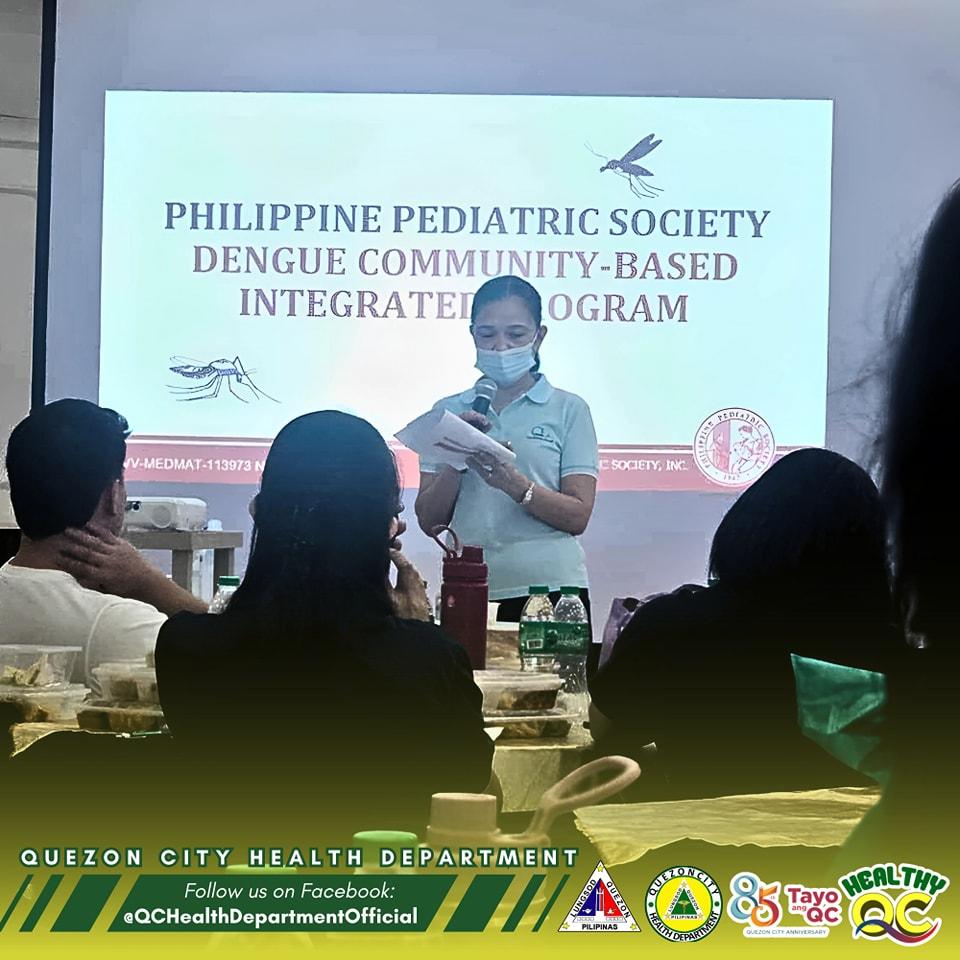
Dengue cases in the Philippines reached an alarming 340,000 as of November 2024—a staggering 81% increase from the previous year—underscoring the urgent need for sustained prevention efforts1. In January 2025, rising dengue cases in areas like Quezon City, Iloilo, and Bacolod further highlighted the threat posed by the mosquito-borne disease. While it’s often said that dengue prevention starts at home, its impact ripples across entire communities, making collective action indispensable.
Dr. Florentina Ty, immediate past president of the Philippine Pediatric Society and a staunch advocate for dengue prevention, emphasized the importance of community collaboration: “People know the importance of cleaning their homes and removing mosquito breeding sites. But sustainability is the challenge. These efforts must become habits—not something done just when cases spike.”
The power of community engagement
Programs like the Philippine Pediatric Society’s (PPS) Dengue Integrated Program, which evolved from the Dengue Warriors initiative in Cebu, emphasize community-level education and action. The Dengue Warriors, originally led by Cebu-based pediatricians Dr. Ronald Leechiu and Dr. Ramon Naharo, started as a workshop series focusing on dengue management and community vector control. This localized effort grew into a national movement under the PPS umbrella.
According to Dr. Ty, the workshops provided a structure that resonated deeply with participants: “What made the program effective was its hands-on approach—combining lectures and practical sessions tailored to different dengue scenarios. The community response has been overwhelmingly positive, with participants eager to apply what they’ve learned.”
The program’s success lies in its inclusivity, targeting not only healthcare workers but also parents, teachers, and local government officials. For example, in one recent two-day session, over 350 midwives, 200 parent-teacher association members, and local healthcare providers received dengue prevention training. “Educating various sectors of the community is key to spreading awareness and fostering long-term behavioral change,” Dr. Ty said.
Exemplary local government action
LGUs play a pivotal role in translating community awareness into sustained action. Cities like Cebu and Bacolod have demonstrated that coordinated efforts can significantly curb dengue cases. These LGUs have implemented programs such as regular fogging operations, consistent community cleanup drives, and localized dengue monitoring systems.
“What LGUs can learn from Cebu and Bacolod is that engaging communities consistently—not just during outbreaks—can truly make a difference,” Dr. Ty emphasized. “Their integrated approach, which involves the whole community, has reduced dengue cases and saved lives.”
Sustaining the 5S strategy
While vaccination remains a critical tool in the fight against dengue, existing prevention measures continue to be the backbone of dengue readiness. Dr. Ty underscored the effectiveness of the Department of Health’s 5S strategy: search and destroy mosquito breeding sites, secure self-protection, seek early consultation, support fogging during outbreaks, and sustain hydration for those infected.
“The problem we face is ningas-kugon,” Dr. Ty noted, referencing the tendency for community efforts to wane after initial enthusiasm. “People take action when cases rise, but once they decline, they become complacent. We need to shift this mindset and make these preventive measures a way of life.”
The path ahead
The Philippine Medical Association has established the Empowering Networks to Defeat Dengue (E.N.D. Dengue Coalition), uniting specialty and subspecialty societies to strengthen dengue prevention and management efforts. The coalition operates under five pillars: vaccine development, global and local epidemiology, vector control, clinical management, and communication and advocacy. Each pillar has specific objectives, with tasks already assigned. Key updates will be presented on the 18th of February attended by medical experts from the specialty societies of the PMA.
“We’re optimistic that this event will open the eyes of participants and further strengthen our initiatives. From there, we’ll continue to share and collaborate with our colleagues, barangays, healthcare workers, private sector, with the LGUs to enhance dengue prevention and management efforts”, Dr. Ty added.
As the PPS and its partners move forward, they remain focused on holistic dengue prevention. The World Health Organization (WHO) calls for an integrated, multi-pronged response to dengue which includes vaccination. “Without a vaccine, our current efforts can only go so far,” Ty said. “Vaccination, combined with sustained community engagement and vector control, will be critical to achieving zero dengue mortality by 2030.”
The success of dengue prevention hinges on the collective action of different stakeholders including medical societies, households, communities, and the national and local government. By making prevention measures habitual and fostering a culture of collaboration, communities across the Philippines can remain dengue-ready and significantly reduce the burden of this deadly disease.
Reference:
